Sheet metal bending presents complex challenges for manufacturers, especially when using tubes or cylindrical rods. Depending on the required quantity of identical products, this repetitive task demands extreme precision. Despite today's technological advancements, the materials and tools used must be precise to achieve an ideal result. In this article, you will find tips for perfect sheet metal bending.
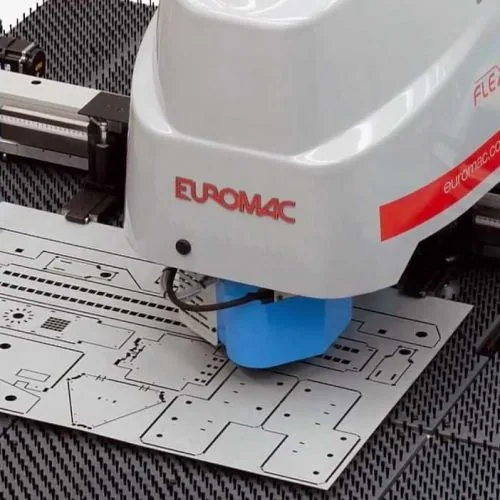
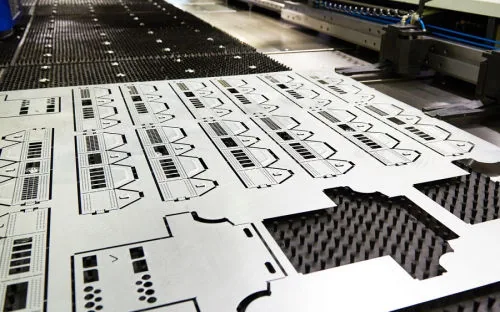
The concept of sheet metal processing encompasses various processes that facilitate shaping metal to the required form and size. CNC metal processing has long been used for metal forming. These processes may include deburring, forming, cutting, punching, bending, and much more, depending on the specifics of the products.
How to Achieve the Perfect Bend?
The result of the bending process is a new shape for the metal sheet, which will later become a finished product or a part of an assembly. Regardless of the technology used, the most important elements for achieving quality and precision in any sheet metal processing are: the type of material, the quality of the machine and tool, and lubrication.
Use these tips and guidelines to achieve the desired bend:
- Various bending techniques are selected depending on the material you use and the product requirements. These include air bending, folding (on a swing beam machine), roll bending (on a rolling machine), coining, and others.
- The choice of bending technique depends on the required shape of the product. For example, roll bending is used for rounded shapes, while elastomer bending is used for any shapes in the case of fragile materials. It is also used on pre-processed surfaces.
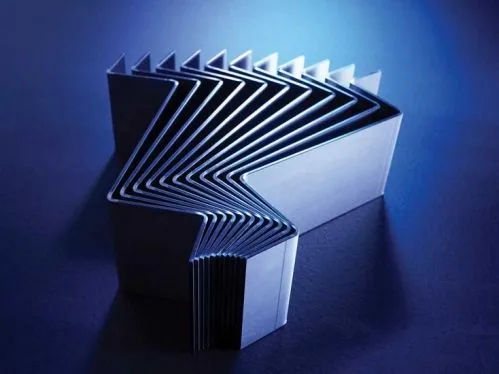
- For offset bends of unusual shapes, Z-profile bending is used.
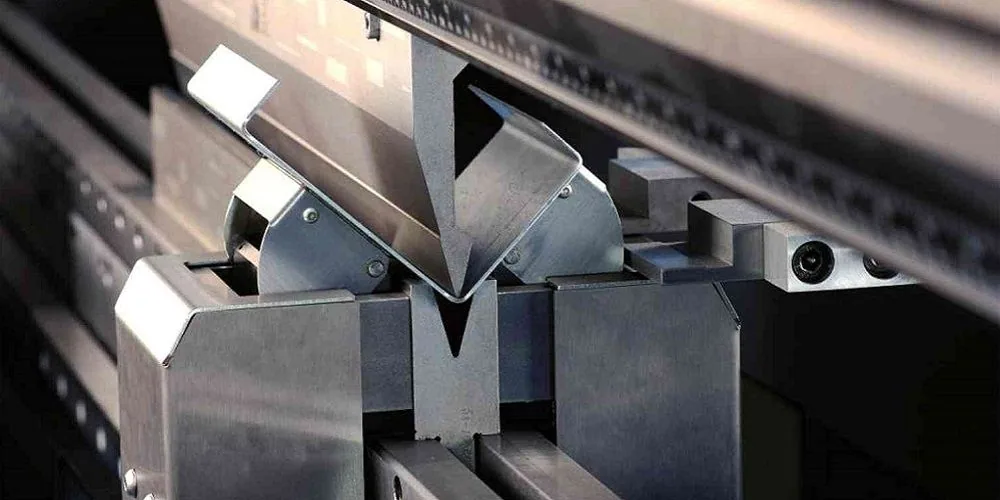
- High-precision air bending and coining are performed on CNC press brakes.
The materials most commonly used for metal bending are copper, aluminum, stainless steel, carbon steel, tin, or alloys of these metals.
Difficulties can also arise during tube bending. This involves using a servo motor and a three-stage bending process. The necessary precision depends on the physical parameters of the material used. These include the type of metal, tube wall thickness, tube length, inner and outer diameter, and the centerline radius. To avoid damaging the part, it is crucial to know the tolerance or the upper limit of the tube wall thickness. It is also necessary to know the bend radius so that the tube does not collapse or deform under pressure.
When bending a metal tube on a press brake, it springs back, increasing the radius value. Usually, a tube made of rigid material has a small center radius. The more it springs back, the more the radius value increases. In welded tubes, if the weld seams are uneven, this can affect the shape and roundness of the tube.
In some cases, the tube may stretch during bending. Although metal resists stretching, this can affect the roundness of the outer surface, making it oval. In some tube applications, some stretching is acceptable, but it affects the precision value of the finished tubular product.
To achieve maximum precision, it is important to use suitable quality tools. Ensure that the available tool is in good condition and well-maintained. Provide both rigid and flexible sets for most tools. For example, a tube of rigid material requires a composite mandrel and vice versa. To achieve the required level of bending precision, the highest quality of welding with perfect seams is necessary.
The use and placement of the tool during bending are of great importance. For example, the wiper die must be positioned at the required angle. The same applies to the clamping die; it must be significantly longer than the tube diameter and secure the part without deforming its shape. Therefore, when the clamping die is of sufficient length, the clamping pressure is evenly distributed over the part.
To avoid friction, wiper dies and mandrels must be properly lubricated. Synthetic oils in the form of gels or pastes available on the market can be used.
When upgrading or purchasing sheet metal bending machines, choose equipment with multiple axes. In some cases, up to 10 axes may be required for bending.
IMA Information
Are you looking for a reliable manufacturer of sheet metal processing equipment who understands your requirements and can offer the highest precision and quality of work within a reasonable timeframe? Italian Machinery Association offers world-class equipment from experienced Italian machine tool manufacturers, such as Euromac and Vimercati. They offer a wide range of press brakes suitable for various customer requirements.